
Our Office
Mansfield Family Dentistry
100 Carlin Road
Mansfield, TX 76063
Phone: (817) 473-0291
Fax: 682-518-1190
Visit Us Online

Tooth loss can affect more than appearance — it impacts how you eat, speak, and feel about your smile. At Mansfield Family Dentistry, we approach implant dentistry as a way to rebuild not just teeth, but everyday freedom: the ability to bite into an apple, laugh without worry, and maintain the structure of your face. Our goal is to help patients regain function and comfort with solutions that are predictable, durable, and designed to look natural.
Implants are suitable for people who have lost a single tooth, several teeth, or an entire arch. Unlike older replacement methods that sit on top of the gums, dental implants are anchored into the jawbone to provide a stable foundation for crowns, bridges, or overdentures. That foundational support gives implants a performance and feel that more closely resembles natural teeth.
Every treatment starts with a detailed evaluation of your oral health and personal goals. We combine a careful clinical exam with digital imaging and a discussion about your lifestyle and expectations so the recommended plan fits your needs. Our practice prioritizes clear communication: we’ll explain options, the steps involved, and what to expect throughout treatment so you can make informed decisions about your care.

Dental implants replace the root and the visible crown of a tooth. That root-like portion — a small, biocompatible post — integrates with the jawbone to recreate the support system that natural teeth provide. Because of this integration, implants preserve bone volume and help maintain the natural contours of your face, which can reduce the sunken look that sometimes follows tooth loss.
Traditional bridges rely on neighboring teeth for support, and conventional removable dentures rest on the gums. Both can be effective in many cases, but implants offer unique advantages: improved chewing efficiency, reduced movement, and the ability to restore individual teeth without altering adjacent healthy teeth. The result is a restoration that behaves much more like your original tooth.
When implants are placed and restored correctly, they can blend seamlessly with your smile. Materials and design choices let us match the color, shape, and translucency of neighboring teeth so the final restoration looks lifelike. For many patients, that combination of function and esthetics makes implants a preferred long-term solution.
At the heart of implant dentistry is osseointegration — the biologic process by which bone grows directly onto the implant surface. Most modern implants are made from titanium or titanium alloys, materials that are well tolerated by the body and encourage bone to form a tight, supporting bond around the post. Once this bond is established, the implant serves as a stable anchor for a crown, bridge, or denture.
The design of the implant, the quality of the jawbone, and the surgical placement technique all play a role in long-term success. We use precise planning tools and proven surgical protocols to position each implant for the best mechanical advantage and esthetic outcome. In many cases a temporary prosthesis can be provided while the implant integrates, allowing patients to maintain function and appearance during healing.
Integration typically takes several months, depending on the site and whether bone grafting or other preparatory procedures were needed. During this period, follow-up care is important to ensure proper healing and to monitor the implant’s progress. Once fully integrated, the final restoration is attached and adjusted for optimal fit and bite.
Successful implant treatment is built on careful planning. We begin with a comprehensive exam that includes dental X-rays or 3D imaging to assess bone volume, the position of nearby structures, and the health of surrounding teeth and gums. This information helps us design a precise surgical plan and select the right type and size of implant for your anatomy.
Health factors such as chronic conditions, medications, smoking, and oral hygiene practices are part of the assessment because they can influence healing. If supportive treatments — for example, periodontal therapy or tooth extractions — are needed, we’ll sequence care so the implant has the best possible environment for integration. When bone volume is inadequate, grafting options can rebuild support to allow predictable implant placement.
Before your procedure, we’ll review anesthesia and sedation options to ensure you’re comfortable. Our team provides clear pre-op and post-op instructions and remains available to answer questions throughout the process. Good communication and realistic expectations are central to a smooth treatment experience.
Placing an implant is typically performed as an outpatient procedure. During the procedure, the implant is inserted into the jawbone at the planned location. Depending on the case, a healing cap or temporary prosthesis may be used to shape the gum tissue and provide function while the implant integrates. Recovery times vary, but most patients experience manageable discomfort and return to normal activities within a few days.
After the surgical phase, a period of integration follows. Once the implant is securely fused with the bone, the restorative phase begins: impressions or digital scans are taken to craft the final crown, bridge, or denture, and these prostheses are adjusted for fit, appearance, and bite. Routine follow-up visits ensure the restoration performs well and that oral hygiene is maintained.
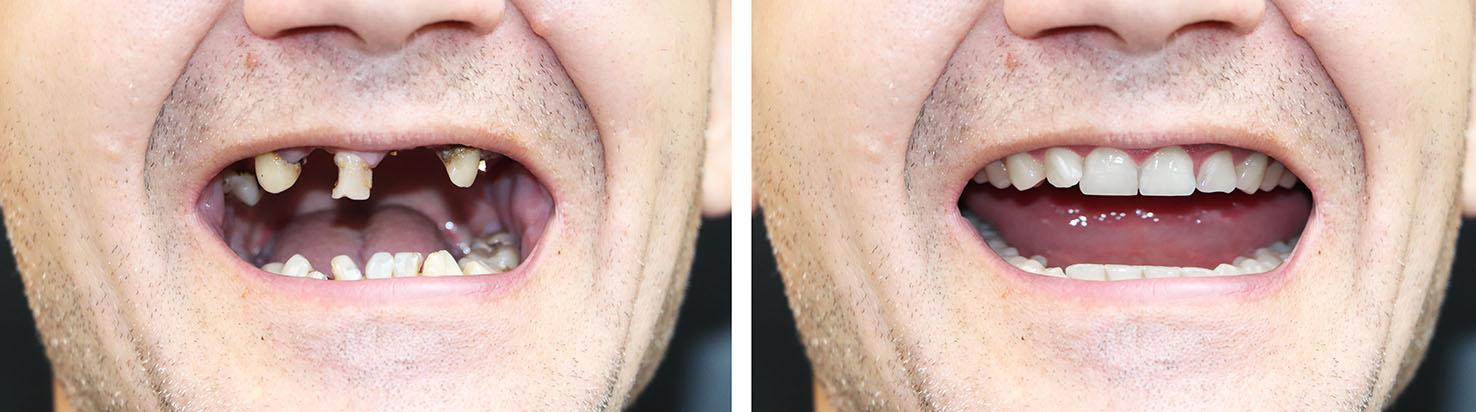
Dental implants require many of the same daily habits as natural teeth: brushing with a soft-bristled brush, daily cleaning around the implant with interdental tools, and regular professional exams and cleanings. Maintaining good gum health is essential because peri-implant tissues — like the gums around natural teeth — need consistent care to remain healthy.
With proper home care and routine dental visits, implants have a strong record of long-term success. Regular checkups let us monitor the implant, evaluate surrounding tissues, and address any changes to bite or wear patterns before they become problems. Small adjustments early on can prevent more significant issues later.
Implants are also uniquely effective at maintaining the bone beneath them. By transmitting functional forces into the jaw, implants help preserve bone volume and support facial structure in a way that removable dentures cannot. That structural benefit contributes to both function and the esthetic longevity of the smile.
Some patients require preparatory procedures such as bone grafting, sinus lifting, or gum therapy to create the right conditions for implants. Bone grafts replace missing volume and allow for predictable implant placement; they are a common and well-established part of many implant treatment plans. We’ll explain any recommended preparatory steps, why they’re important, and how they fit into the overall timeline for restoring your smile.
Because each smile is unique, treatment timelines and steps vary. Our team develops individualized plans that balance clinical needs with patient goals, emphasizing reliable outcomes and long-term oral health.
Implant dentistry offers a reliable way to rebuild function and beauty after tooth loss. Whether you’re exploring a single implant, a bridge supported by implants, or a full-arch restoration, thoughtful planning and careful execution produce results patients can trust. Our team is committed to providing clear explanations, modern techniques, and attentive follow-up care so you can enjoy a healthy, confident smile.
If you’d like to learn more about implant options or determine whether implants are a good fit for your needs, please contact our practice for more information. We’re here to answer your questions and guide you through every step of care.
Dental implants are small, biocompatible posts that replace the root portion of a missing tooth and provide a foundation for a crown, bridge, or denture. They are commonly made from titanium or titanium alloys because these materials encourage a stable bond with surrounding bone and resist corrosion. Implants restore chewing function and help preserve jawbone volume so facial contours remain supported.
The long-term stability of an implant depends on a biologic process called osseointegration, in which bone forms a tight interface with the implant surface to create a solid anchor. Surgical planning, implant design, and the quality of the jawbone all influence how predictably integration occurs. After integration, a custom restoration is attached and adjusted for fit, function, and appearance.
Good candidates for dental implants include adults who are missing one or more teeth and who maintain reasonable oral hygiene and overall health. Adequate jawbone volume and healthy gums are important because they provide the support needed for stable implant placement. Many patients with controlled chronic conditions can still be candidates after careful evaluation and planning.
A comprehensive assessment looks at factors such as smoking, certain medications, and periodontal health because these can affect healing and integration. When bone volume is insufficient, grafting procedures can often rebuild support to allow implant placement. The final determination is made after clinical examination and appropriate imaging so patients receive a plan tailored to their needs.
Dental implants replace both the root and the visible portion of a tooth, which helps preserve the underlying bone and maintain facial contours. By anchoring restorations into the jaw, implants provide improved chewing efficiency and reduced movement compared with removable dentures. Because implants do not rely on adjacent teeth for support, they allow individual tooth replacement without altering healthy neighboring teeth, unlike many bridges.
Traditional removable dentures rest on the gums and may require adhesives or frequent adjustments to stay secure, while implant-supported options either fix restorations in place or use attachments for improved retention. Implant-supported bridges use implants for support instead of trimming neighboring teeth, which helps conserve natural tooth structure. The choice between these options depends on clinical findings, patient preferences, and long-term goals for function and esthetics.
Planning begins with a comprehensive oral exam and diagnostic imaging to evaluate bone volume, tooth positions, and nearby anatomical structures. Digital planning tools and precise measurements are used to select the correct implant type, size, and placement site, and to design any temporary or final restorations. Health factors such as medical history, medications, and oral habits are reviewed to identify anything that could affect healing.
When preparatory treatments are needed, the care team sequences procedures like periodontal therapy, extractions, or bone grafting so the implant site is optimized for integration. Before surgery, the team discusses anesthesia and sedation options to ensure patient comfort and sets clear pre-op instructions. At Mansfield Family Dentistry, this stepwise approach helps create predictable outcomes and realistic expectations for each patient.
Implant placement is typically performed as an outpatient procedure using local anesthesia and, when appropriate, sedation to keep patients comfortable. The implant is inserted into the jawbone at the planned location and a healing cap or temporary restoration may be placed to shape the gum tissue and allow function during integration. Most patients experience manageable discomfort, swelling, and mild bruising for a few days that respond well to simple pain control and cold therapy.
Following surgery, maintaining clean surgical sites and following the practice's post-op instructions are important to support healing and reduce the risk of complications. Short-term dietary modifications and avoiding strenuous activity for a few days are commonly recommended. The follow-up schedule includes visits to monitor healing, remove sutures if needed, and confirm progress toward integration before the restorative phase begins.
The biologic process of osseointegration generally takes several months, with typical timelines ranging from three to six months depending on the site and individual healing response. Sites that receive bone grafting or that involve softer bone can require additional healing time before the implant is ready for the final restoration. Temporary restorations are often used during this period so patients maintain appearance and some level of function.
Factors such as smoking, systemic health conditions, and medication use can influence healing and may extend the treatment timeline. Regular follow-up visits allow the team to assess integration progress with clinical exams and imaging and to determine the appropriate moment to attach the definitive crown, bridge, or denture. The overall plan balances clinical readiness with the goal of predictable, long-term results.
Available restoration options include single-tooth crowns mounted on individual implants, implant-supported bridges for consecutive missing teeth, fixed full-arch restorations for replacing an entire upper or lower arch, and implant-retained overdentures that snap onto implants but can be removed for cleaning. Each option offers different benefits in terms of stability, maintenance, and esthetics, and the appropriate choice depends on how many teeth are missing and the patient's functional goals. Modern restorative materials and lab techniques allow restorations to be matched closely to surrounding teeth for a natural appearance.
Fixed full-arch restorations anchored by four to six implants can replace an entire set of teeth with a non-removable prosthesis that restores confidence in speech and chewing. Implant-retained overdentures use fewer implants to improve retention while preserving the convenience of a removable prosthesis for home hygiene. The treatment team will explain the pros and cons of each approach and recommend the option that best fits the clinical situation and patient preferences.
Daily oral hygiene for implants is similar to natural teeth and includes brushing twice a day with a soft-bristled brush and cleaning around the implant with interdental tools such as floss, interdental brushes, or water irrigators. Keeping the surrounding gum tissue healthy is essential because peri-implant tissues support the long-term stability of the restoration. Avoiding tobacco and maintaining regular professional cleanings and exams further reduces the risk of complications.
During routine dental visits the clinician checks the implant, restoration fit, occlusion, and tissue health, and provides individualized maintenance recommendations. If early signs of inflammation, mobility, or discomfort appear, prompt evaluation can address issues before they progress. Consistent home care combined with scheduled professional monitoring is the best strategy for preserving implant health over time.
Like all surgical procedures, implant placement carries some risks including infection, slow or failed integration, nerve irritation, and sinus complications in upper jaw cases. These complications are uncommon when cases are planned and executed carefully, but they can occur and may require additional treatment such as antibiotics, minor surgical revision, or, in rare cases, implant removal. Thorough preoperative assessment and strict adherence to post-op care reduce the likelihood of problems.
Early recognition and prompt management are key to resolving many issues and protecting surrounding tissues. The treatment team monitors healing closely and uses imaging and clinical exams to detect changes in integration or tissue health. When complications arise, the practice outlines corrective options and coordinates any necessary follow-up care to restore function and comfort.
Implant monitoring begins with a detailed baseline assessment and continues with scheduled follow-up visits that include clinical exams and periodic imaging to evaluate bone levels, tissue health, and restoration fit. The team assesses bite forces and wear patterns, checks for signs of inflammation or mobility, and reinforces home care techniques specific to implants. Preventative maintenance visits allow small issues to be corrected before they affect long-term success.
Mansfield Family Dentistry coordinates care with specialists when advanced interventions are needed and maintains clear communication with patients about what to watch for at home. Consistent professional monitoring, combined with good oral hygiene and lifestyle choices, supports the predictable performance and longevity of implant restorations. Patients who follow recommended maintenance schedules enjoy implant-supported function and esthetics for many years.

Dental Implants, Root Canals, Sedation Dentistry, Tooth Extractions, Porcelain Veneers, Crowns, Dentures, Bridges, Nitrous Oxide, Teeth Whitening, Inlays & Onlays, Bonding, Fillings & Restorations, Dental Sealants, Invisalign®, Sleep and Snoring Issues
Our mission is to transform smiles and lives through exceptional, personalized dental care.
Mansfield Family Dentistry serves the Texas communities of Mansfield TX, South Arlington TX, Watsonville TX, Kennedale TX, Sublett TX, Britton TX, Venus TX, Midlothian TX, Irving TX, Grand Prairie TX, Haltom City TX, Bedford TX, Burleson TX and the Greater Arlington TX Area


